
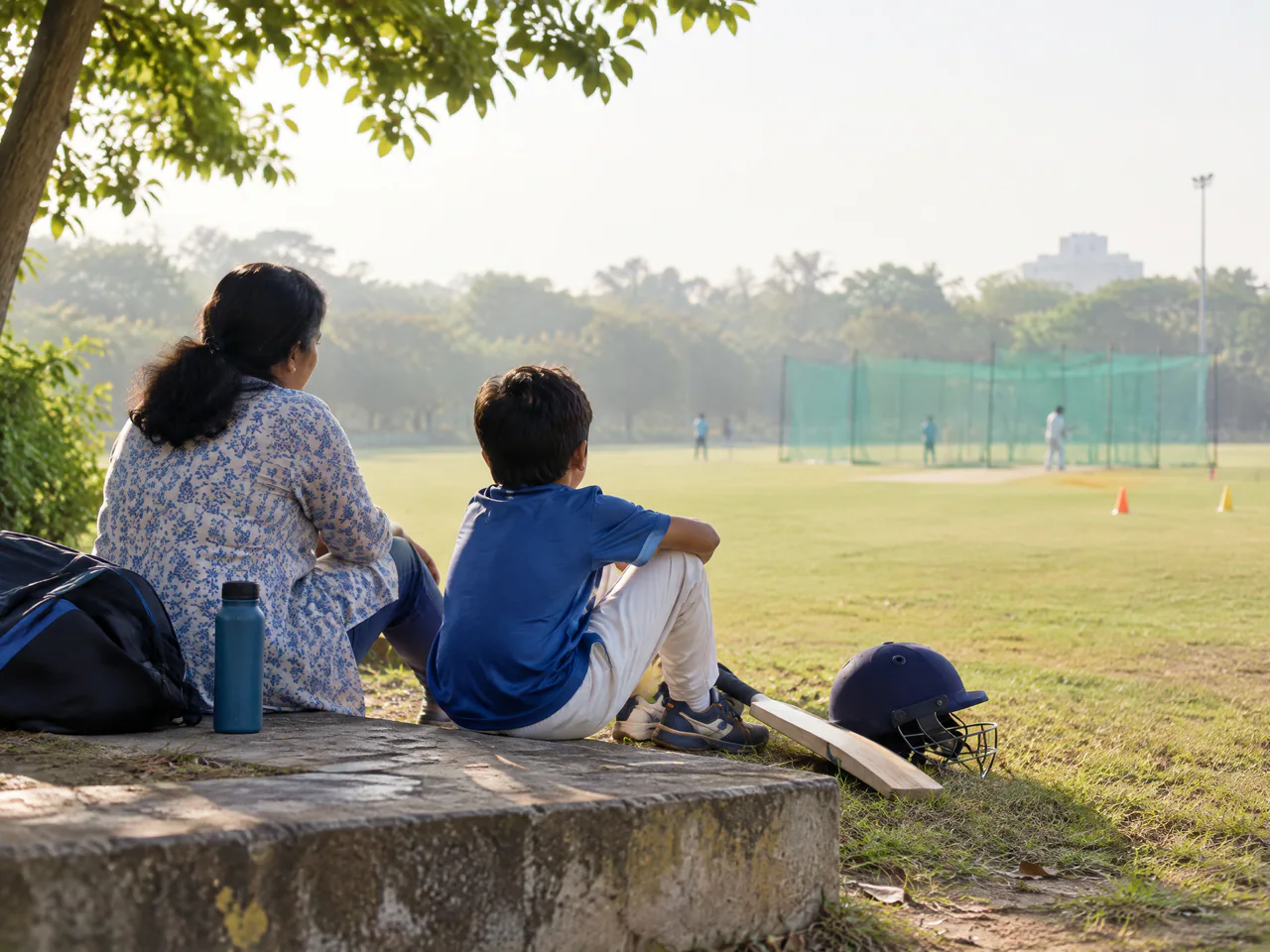
When a child stops enjoying sport, listen first: explore the coaching, group fit and pressure before deciding whether to adjust, pause or switch.
You paid the admission fee. You bought the kit. For the first three weeks, your child ran to the door when it was time to leave. Then the excitement faded. Now every practice day comes with an excuse: tiredness, a stomach ache, or “I don't feel like it today.”
If it has happened more than once, you may wonder whether your child simply isn't the sporty type. Don't assume that. A change in enthusiasm can have many causes, from a poor group fit to pressure or a sport they genuinely don't enjoy. Ask what is going on before trying to fix it. If a stomach ache or other symptoms keep recurring, check with a healthcare professional rather than treating them as an excuse.
It Is Rarely Just About the Sport Itself
“Maybe they don't like football” or “maybe swimming isn't for them” could be true. But the environment around a sport matters too: how the coach teaches, how children are grouped, whether your child has friends there, and how adults respond to mistakes. Children's Hospital Colorado's advice for parents recommends a calm conversation before deciding what to do next.
These four possibilities are worth checking; they are not a diagnosis or a ranking of the most common reasons in India.
Reason 1: They Were Rushed Past the Fun Part
Some young children join because they want to run, play and learn alongside friends. If nearly every session becomes drills and correction before they have enjoyed the game, their interest may fade. That doesn't mean technique is unimportant; it means the teaching approach should suit the child's age and goals.
What helps: Ask your child what happens at practice and whether there is time to play. Ask the coach how games and skills are balanced for beginners. The American Academy of Pediatrics encourages age-appropriate games, positive experiences and attention to overtraining and burnout. If you are comparing programmes, our guide to what a sports academy does can help you frame your questions.
Reason 2: The Batch Does Not Match Their Level
A child placed with much more experienced players might feel lost. A child who needs more challenge might be bored. Age, skill and social fit all affect the experience; none can be judged reliably from one difficult day.
What helps: Ask the academy how groups are formed and whether the coach has noticed the same problem. If your child agrees, ask about trying an age- and skill-appropriate group. You can also compare sports coaches in India and ask a provider how they work with beginners; a directory listing alone cannot confirm a coach's current groups.
Reason 3: Comparison Is Doing More Harm Than Coaching
“Your friend scored twice; why didn't you?” may be intended as encouragement, but your child may hear criticism. Repeated comparisons from adults can make every practice feel like a test rather than a chance to learn.
What helps: Notice effort and a specific improvement your child values: “You tried that pass again after it didn't work the first time.” Ask the coach how they give feedback and handle mistakes. The aim is to learn what motivates this child, not to promise that one praise technique will work for everyone.
Reason 4: They Cannot See a Sense of Progress
A child may lose interest if every week feels identical. Progress need not mean winning a match or moving to an advanced squad: learning a pass, making a friend, or feeling more confident can matter to them.
What helps: Ask your child what they want to get better at, then ask how the coach shares progress. Choose a small, realistic goal together if your child wants one. If the programme's aims and your child's aims do not match, our academy, club and coaching-centre comparison offers a starting point for choosing another format.
Signs It Might Genuinely Be the Wrong Sport
Sometimes a child likes being active but consistently enjoys a different activity more. They may say plainly, across more than one conversation, that they would rather try another sport. Take that preference seriously. Playing several activities while young can be a reasonable way to discover what they enjoy; you do not have to make a permanent choice now.
Ask providers whether they offer introductory or multi-sport sessions rather than assuming every sports academy in India does. Check age groups, coaches, fees and current offerings directly with the provider.
How to Have the Conversation With Your Child
Choose a calm moment outside practice. Instead of “Do you want to quit?”, ask “What part of practice do you like?”, “When does it stop being fun?” or “Is there anyone or anything that makes you uncomfortable?” Listen before defending the coach or pointing to the money already spent. A child might need time and several conversations to explain what is wrong.
Safety comes first: If your child describes bullying, intimidation, unsafe behaviour or feeling unwell, do not make attendance the price of a trial period. Take the concern seriously, contact the programme's safeguarding lead or relevant authority, and seek healthcare advice when symptoms are persistent. The U.S. Center for SafeSport's guide to bullying in youth sports describes warning behaviours and ways adults can intervene; follow the applicable local safeguarding procedure in India.
Turn the Conversation Into a Shared Next Step
Start with one open question, not a checklist of accusations: “What has changed since you first enjoyed going?” Let your child choose whether to talk now or later. Children's Hospital Colorado recommends discussing feelings, coaching and group level at a calm moment; the NSPCC also advises waiting until the child is ready and talking away from teammates. 1 2
The prompts below are examples you can adapt, not a test that identifies a condition. Ask only what is useful and give your child time to answer.
| What you need to understand | A prompt to try | What to do with the answer |
|---|---|---|
| What they still enjoy | “Is there a part you would miss?” | Keep that preference in mind when discussing another group or activity. |
| What changed | “Can you tell me about a recent session that felt difficult?” | Ask about the specific situation rather than labelling the child unmotivated. |
| Whether the group fits | “Do you understand the tasks, and do you feel included?” | With the child's agreement, ask the coach about teaching level and group arrangements. |
| How the timetable feels | “How do you feel before practice and at school afterward?” | Review travel, homework and other commitments; seek healthcare advice for persistent symptoms. |
| Whether something feels unsafe | “Is anyone doing something that makes you feel frightened or uncomfortable?” | Take the concern seriously and get appropriate help; do not require another session to prove it. |
Repeat back what you heard: “You like playing, but you feel left out in this group. Have I understood?” Avoid making the money already spent the reason they must continue. If the difficulty seems connected to tiredness, the early-morning training guide helps you check the timetable without assuming an early batch is better.
Before You Let Them Quit, Try This First—If They Feel Safe
A small change can be worth discussing only when your child feels safe and wants to try:
- Talk with the coach about what your child has described, without assuming the coach has noticed it.
- Ask whether a different age or skill group is available.
- Discuss a lighter schedule if overscheduling or tiredness is part of the problem. Do not treat “four sessions down to two” as a universal prescription.
- If your child agrees and the programme permits it, observe a session to understand the teaching environment.
Agree with your child when to revisit the decision. If a change does not help, you can stop or try a different activity. A continuing concern about safety, pain or well-being calls for action now, not a wait-and-see experiment.
When Quitting Is Genuinely the Right Call
Stopping can be the right decision. A child who dislikes a sport, feels persistently distressed or is dealing with an unsafe environment does not need to keep attending to prove resilience. If the difficulty is an ordinary learning setback, you can discuss commitments and options together without dismissing how your child feels.
If your child lights up while trying something different, that tells you something useful about fit—not about their character. It is fine for their interests to change.
Compare a Change, a Pause and a Different Programme
For a child who feels safe and wants to try a change, write down one problem, one proposed adjustment and a time to talk again. For example: “The instructions feel too advanced; we will ask about a beginner group; then we will talk after the agreed introductory session.” This is an illustration, not a required number of sessions or a promise that changing groups will help.
Before agreeing, ask the provider which named batch is available, who teaches it, how children are grouped and whether an introductory session has a charge. Confirm the current schedule and written pause, transfer or withdrawal terms. An advertised “trial class” is not automatically free and is unrelated to a sports-selection trial.
If your child wants to pause or leave, ask what activity they would enjoy next without demanding an immediate replacement academy. A less competitive group or informal play may suit them better. The AAP encourages varied, enjoyable activity and attention to overscheduling; it does not establish one ideal timetable for every child. 3
A safety disclosure is different from a preference question. Use the programme's safeguarding route or relevant local authority, and seek immediate local help if a child is in danger. Do not turn the worksheet into an attendance experiment when bullying, unsafe conduct, pain or significant distress is involved. Keeping a provider's explanation does not mean ListingSports has verified it.
Finding a Better Fit
If switching makes sense, involve your child in the next choice. When possible, visit a session, ask about beginner groups and how the coach responds when a child struggles, and check whether the programme offers a genuine introductory trial. A nearby sports club in India may be another format to explore; confirm current participation rules and suitability directly.
Listing Sports provides discovery information on sports academies, clubs and coaches. It does not assess child-safety standards, guarantee a multi-sport option or verify a provider's current beginner places. Speak with the provider and, when possible, your child before enrolling.
Frequently Asked Questions
Should I force my child to continue if they want to quit?
First ask why. A group mismatch or coaching issue may be worth discussing if your child feels safe and wants to continue. Do not force attendance when bullying, unsafe behaviour, illness or significant distress may be involved. Respond to those concerns promptly.
How long should a child try a sport before deciding it is not for them?
There is no universal two- or three-month rule. The child's age, programme, experience, safety and preferences all matter. Check in after a few sessions and agree together whether it makes sense to continue, change groups, pause or try something else.
Is it normal for children to try multiple sports before settling on one?
Yes. Children can explore more than one activity while they discover what they enjoy. There is no requirement that every child settle on a single sport; the best mix depends on their interests, time, health and family circumstances.
Can switching academies help if the sport itself is fine?
It might. Coaching style, group fit or the overall environment may be the issue. Ask your child what would need to change, check the prospective provider's current programme, and do not switch without addressing an unresolved safety concern.
What if my child likes the sport but dislikes the academy?
Ask what they would want to change: teaching level, teammates, feedback or schedule. If they feel safe and want to continue, discuss a specific alternative group with the provider. Confirm that it actually exists and suits their needs. Switching does not remove the need to address an unresolved safety concern.
Should the fees already paid decide whether my child continues?
Fees are a practical issue, not a reason to dismiss safety or well-being. Read the provider's current written withdrawal, pause or transfer terms and ask what options are available. Do not assume a refund is due or guaranteed. Discuss the participation decision with your child separately from recovering the payment.
Help Your Child Find Their Sport
A child who stops one sport has not failed at sport. Listen to what they want from the experience and choose the next step together. Listing Sports can help you explore local programmes, but the child and the provider must confirm whether a particular setting is right for them.
Sources and Further Reading
These practical prompts are original editorial examples informed by the sources below, checked on 12 October 2026. This article is general information, not a diagnosis, individual treatment plan or certification of any academy's child-safety arrangements.
Editorial illustration — not evidence of a visit to a venue or attendance at an event.