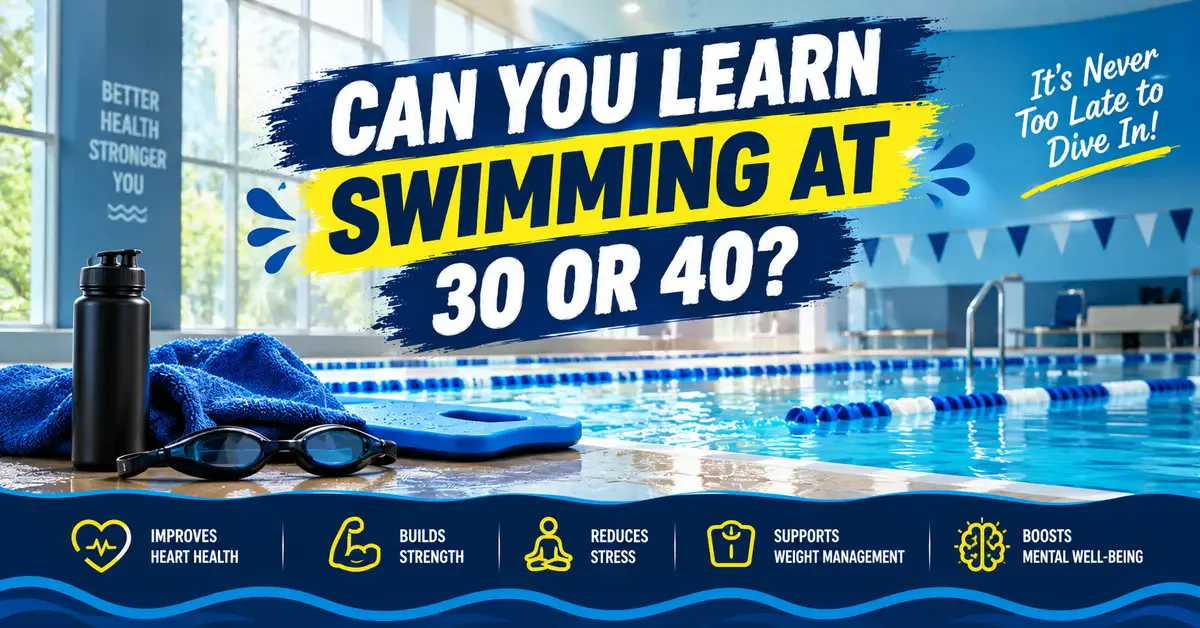
Yes, you can learn swimming at 30 or 40. Your starting skills, confidence in water and individual needs matter more when choosing lessons than your birthday. Look for an adult beginner programme with qualified instruction and suitable supervision. There is no reliable promise that everyone will learn within a fixed number of days.
Perhaps you want to enjoy a pool without sitting on the edge. Or you have searched for adult swimming classes several times but stopped before calling. The next step is to find a class that accepts your actual starting point, including “I have never put my face in the water.”
Swim England’s adult swimming framework has no upper age limit and covers learners from complete beginners to people improving their technique. It is a useful reference for what structured adult learning can involve, not proof that a particular Indian academy follows that framework.
Start with your Swimming Level, Not your Age
“I want to learn swimming” can mean different things. You might be uncomfortable entering a pool, able to move a short distance but unable to coordinate breathing, or already swimming and looking for better technique.
Explain that starting point before joining. Ask whether the programme teaches adult non-swimmers, rather than assuming an “adult batch” is a beginner class. A fitness swimming session, Masters group or lap-swimming pass may be intended for people who can already swim.
Choose one initial goal you can discuss with the teacher: becoming comfortable in the pool, developing basic water skills, or building coordinated swimming. The programme should assess you and explain what comes next. Progress through skills is more useful than comparing yourself with someone who started at the same age.
How to Choose Adult Beginner Swimming Lessons
Before paying, ask these questions:
1. Do you teach adults who cannot swim independently?
2. Who will teach my batch, and what swimming-teaching qualifications do they hold?
3. How many learners share each teacher, and how are different ability levels separated?
4. Which pool and teaching area will we use, and what supervision is provided?
5. How do you support someone who is anxious about water?
6. Is an assessment or introductory session available, and what does it cost?
7. What is included in the fee, and what happens after a missed or cancelled class?
8. How will you decide when I am ready to move to another level?
Ask for specific answers. “Our coaches are excellent” does not tell you who teaches the class or how that teacher works with nervous adults. Request the qualification name and issuing organisation. Check relevant credentials rather than treating a social-media following or competitive swimming result as proof of teaching ability.
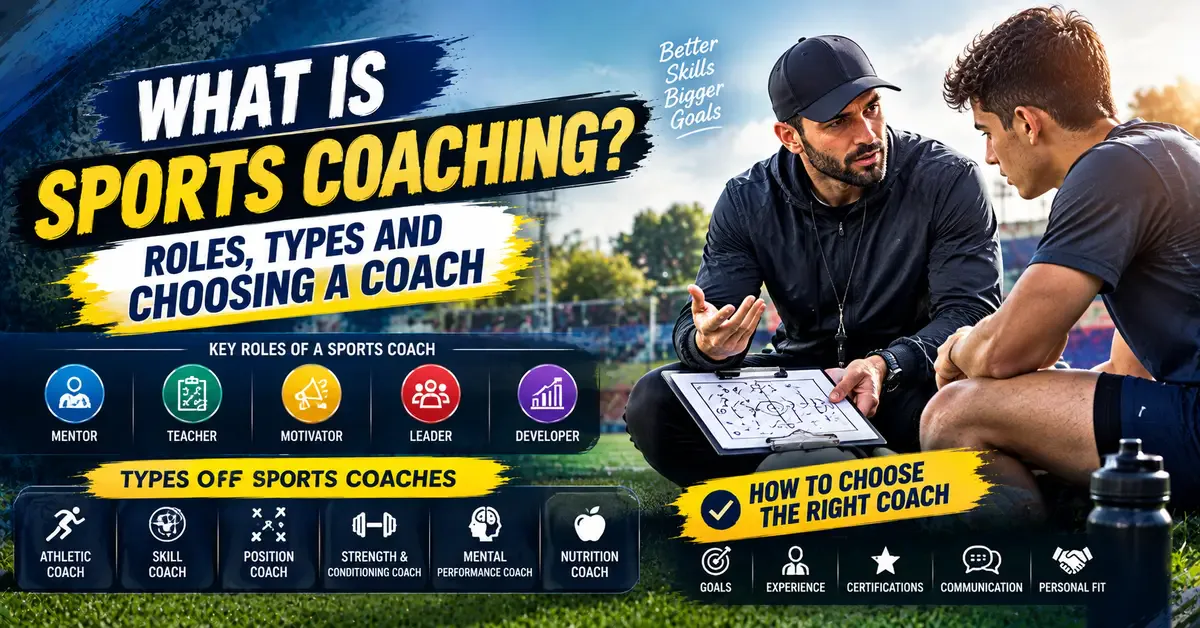
Our guide to choosing a sports coach explains the wider questions about experience, session structure and professional scope.
Group Lessons or Private Swimming Lessons?
A beginner group can work well if the teacher can observe each learner, give feedback and accommodate different confidence levels. Ask about the actual batch size and teaching space, not just the maximum number advertised.
Private swimming lessons may suit you if you want closer individual attention, need a more flexible arrangement or feel uncomfortable learning in a group. They still require suitable instruction and supervision. Paying more does not guarantee faster progress.
If water anxiety is your main concern, describe it before booking. A teacher who explains how the first session will be adapted gives you something concrete to assess. Dismissing fear, making jokes about your age or promising to “throw you in so you learn” are reasons to look elsewhere.
Cindy’s Swim School’s adult guide also distinguishes online preparation from in-person teaching: videos cannot observe your movements or respond when you become anxious.
Check the Pool and Supervision before Enrolling
Ask where the first lesson takes place and how you will enter and leave the pool. Confirm the teaching-area depth, access steps or ramp, changing facilities and any accessibility needs. A large pool is not automatically the right pool for a non-swimmer.
Ask who provides close supervision during teaching and who handles an emergency. The American Red Cross recommends designated swimming areas supervised by lifeguards, swimming with a buddy and never swimming alone. It also advises close support for weak or inexperienced swimmers. A friend’s presence does not replace suitable beginner instruction.
Do not treat shallow water, inflatable rings or a kickboard as a guarantee of safety. Confirm how any teaching equipment will be used under supervision. Follow the facility’s rules and the teacher’s assessment of your ability.
If you have a health condition, recent surgery or an injury that could affect exercise or water safety, ask your healthcare professional about starting. Explain relevant needs to the teacher; a swimming coach is not a substitute for medical care.
What Should your First Swimming Lesson Involve?
Expect a conversation before anyone asks you to demonstrate a skill. Tell the teacher about previous lessons, any frightening water experience and what you want to achieve.
An adult beginner session may introduce entering and leaving the pool, becoming comfortable in the teaching area, breathing awareness and supported basic skills. The exact order should reflect your assessment and the provider’s programme. It should not require you to perform a stroke immediately or keep pace with an experienced swimmer.
You can say, “I am nervous about putting my face in the water. How will we work toward that?” Ask how to pause an activity and request help. A calm explanation matters more than a promise that you will feel confident by the end of the session.
This article describes what to ask about; it is not a set of drills to try alone.
What to Bring to Beginner Swimming Classes
Start with comfortable swimwear permitted by the pool, a towel and a change of clothes. Ask whether a swimming cap is required and whether goggles are recommended. Check rules for swim tops, prescription goggles or any other items you need.
Pack toiletries, suitable poolside footwear and drinking water as appropriate. You do not need to buy every training accessory before your first lesson. Ask which equipment the teacher supplies and which items you should bring.
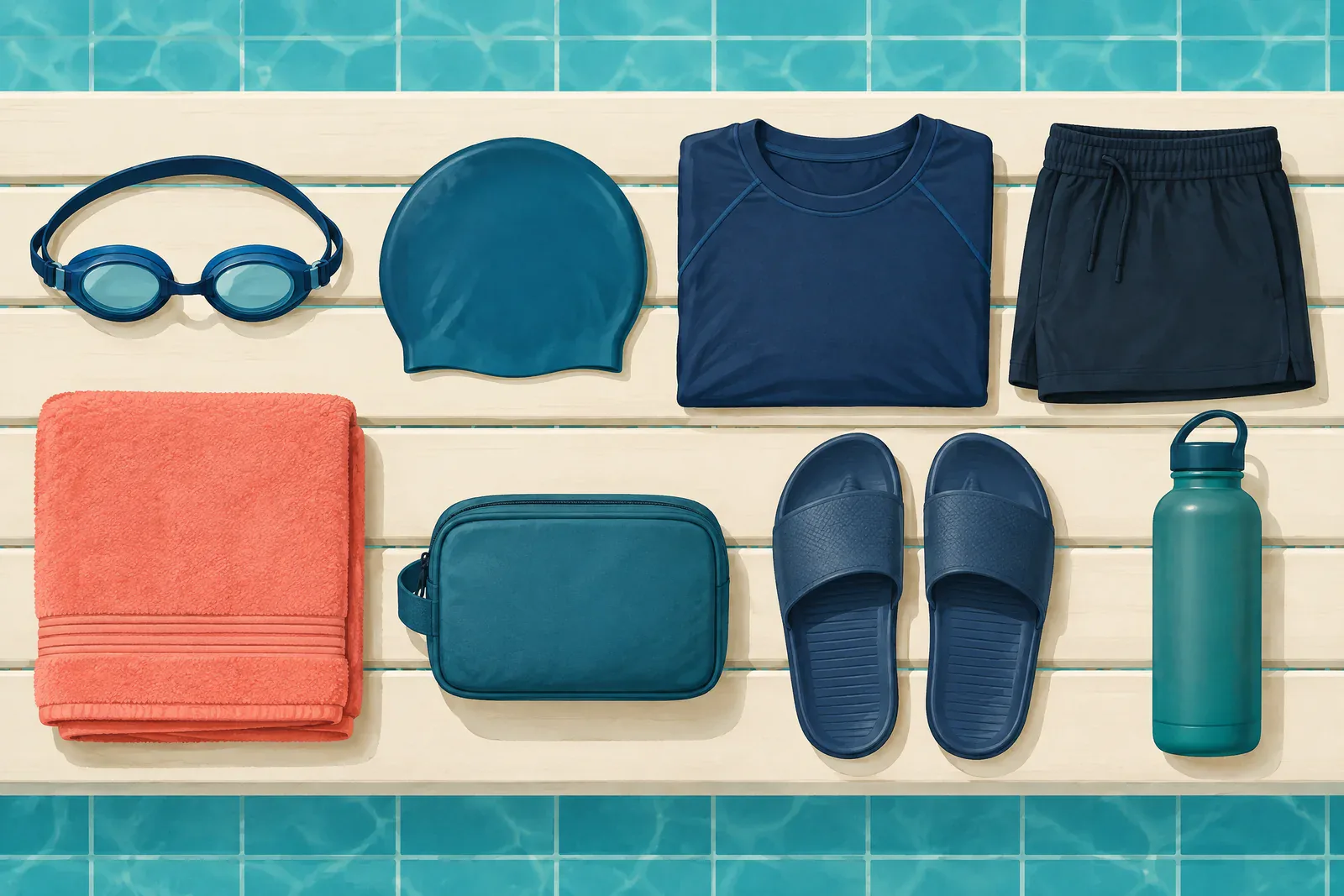
For a real Indian example, Nisha Millet’s Swimming Academy lists a swimsuit and towel, a cap for long hair, and goggles as optional but recommended. Its website says equipment is not rented or sold at its pools, so checking before arrival avoids an unnecessary last-minute purchase or missed session.
Comparing Swimming Programmes in India: Check the Exact Branch
Provider names can help you start researching. Branch-specific information helps you decide whether a programme actually fits.
Bengaluru: Distinguish Beginner Classes from Lap Access
The official Nisha Millet’s Swimming Academy website lists beginner group classes and personal or family classes at its own locations. It separately advertises lap-swimming access for regular swimmers. Those are different services.
There is an important location detail: its BCU Basecamp pool is labelled for intermediate and advanced swimmers only. Do not assume every pool in the same academy network accepts beginners.
Read the Nisha Millet Bengaluru profile on Listing Sports, then ask the academy which location and batch accepts adult non-swimmers. Confirm who teaches it. The academy’s name does not establish that Nisha Millet personally delivers your lesson.
Mumbai: A Swimming Category does not confirm Adult Admission
The Sports Gurukul’s official academy directory lists swimming coaching at its V.K. Krishna Menon Academy branch in Borivali West. Its broader academy page is strongly child-focused, so the listing alone does not establish a class for a 30- or 40-year-old beginner.
Use the TSG Borivali West profile as an enquiry starting point. Ask about adult eligibility and current beginner batches before travelling or paying.
These examples were checked against public official pages on 23 October 2026. They are not endorsements, venue inspections or confirmations of current availability.
How Long does it take to Learn Swimming as an Adult?
There is no single timetable. Becoming comfortable in water, coordinating a stroke and swimming independently are different achievements. Ask the teacher what the course assesses instead of accepting an undefined promise to “learn swimming in ten days.”
Water confidence, previous experience, suitable practice opportunities and individual needs can affect progress. Both Cindy’s Swim School and Nisha Millet’s academy describe learning as individual. Their statements do not establish a standard number of lessons for everyone.
After a session, note what you practised and what feedback you received. Discuss the next goal with the teacher. If you practise between lessons, do so only in suitable supervised conditions agreed with the teacher, never alone.
Swimming pool skills also do not automatically establish readiness for a sea, lake or river. Currents, temperature and other environmental risks change the situation.
Watch: Water Safety Before your First Lesson
 Swimming and Water Safety Tips from the American Red CrossYouTube video
is a 2-minute 29-second awareness video from the organisation’s official channel, published in 2011. It is general water-safety material, not an adult swimming course.
Use it alongside the Red Cross’s www.cdc.gov. Videos cannot supervise you or establish that you are ready to swim independently. If YouTube is unavailable, the written guidance remains accessible.
Frequently Asked Questions
Is 40 too old to learn swimming?
- Swim England’s adult framework has no upper age limit. Choose instruction that suits your current skills and individual needs rather than assuming you must join an advanced class because you are an adult.
Can I learn swimming if I am afraid of water?
Fear does not automatically rule out lessons. Discuss it with an adult swimming teacher before booking and ask how they support nervous beginners. You should not be pressured into an activity you are not ready to attempt.
Do I need to learn all four strokes?
Not as an initial requirement. Agree on beginner goals with the teacher and understand how the programme assesses progress. Developing water confidence and basic competence comes before choosing a competitive or advanced training goal.
Finding your Next Step with Listing Sports
Search for adult beginner swimming lessons using your city and locality. Compare the programme, teaching arrangements and travel time, then contact the provider with the same questions.
The swimming discovery page on Listing Sports offers a starting point for reviewing available profiles. A sports listing in India does not guarantee a suitable class, verified qualifications or a current place in a batch. Confirm those details directly.
If you need help checking local options, use our guide to finding sports activities in India. Begin with one clear enquiry: “I am an adult non-swimmer. Which beginner programme is suitable for me, and how will I be supervised?”