
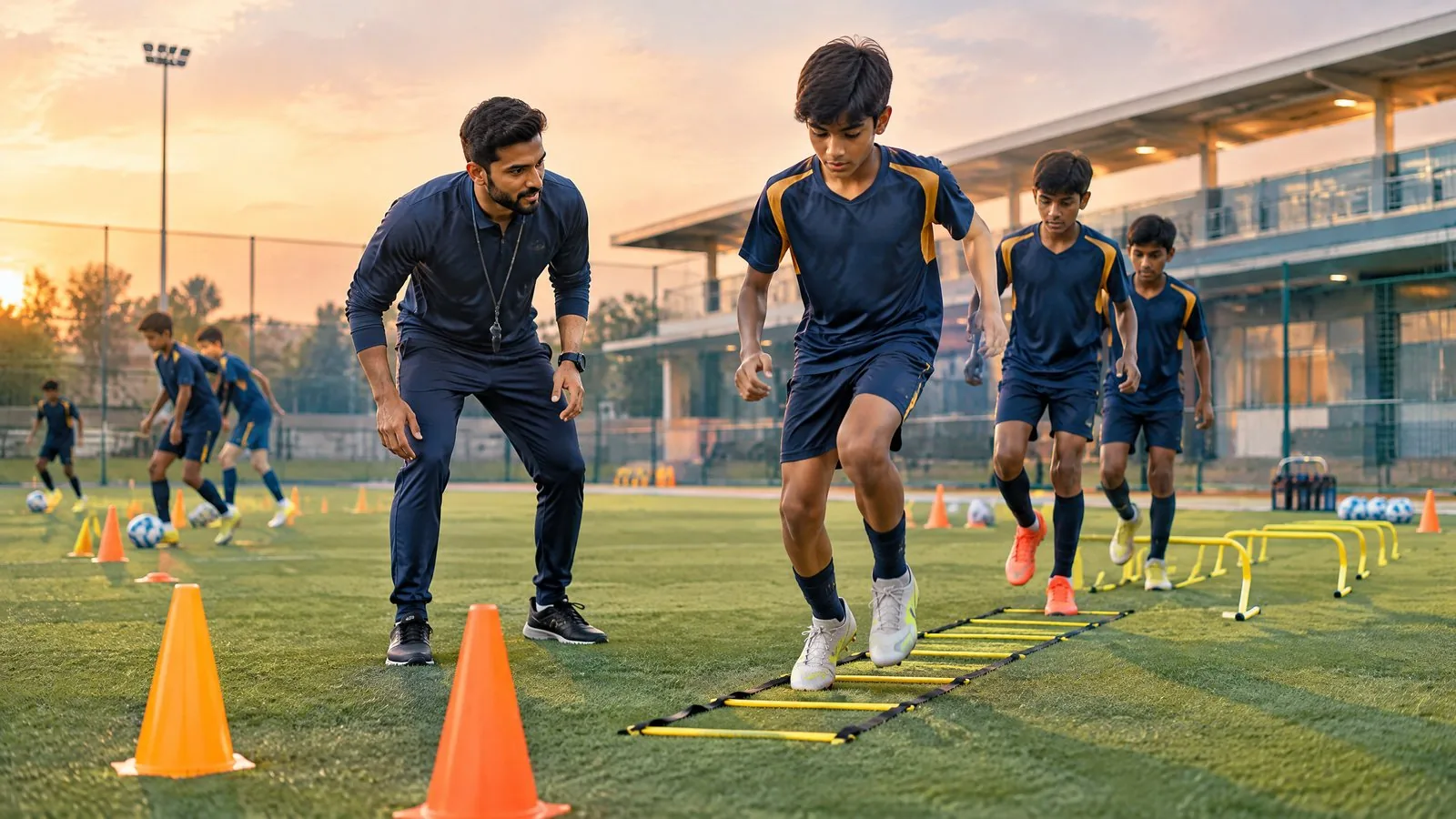
This guide explains the sports academy meaning, its purpose, how structured training works, the main types of academies, and who should join—from kids and beginners to adults.
Ask ten parents why they enrolled their child in a sports academy and you will get ten different answers: fitness, discipline, a shot at state-level selection, or simply less screen time. The reasons vary, but the confusion is common. Is an academy only for future professionals? How is it different from a club or a coaching centre? What actually happens inside one?
This guide answers those questions clearly, covering the sports academy meaning, its purpose, how the training works and who should join.
What is a Sports Academy?
A sports academy is a structured training institution where people learn and improve in one or more sports under qualified coaches. Unlike casual play, training follows a planned programme with defined batches, skill levels, schedules and goals.
The sports academy meaning goes beyond the game itself. A good academy builds technique, physical fitness, game awareness and mental strength together, and it gives students a clear path to progress from beginner drills to competitive play. Across cities in India, from metro hubs to smaller towns, sports academies in India now cover everything from cricket, football and badminton to swimming, tennis, archery and athletics.
Purpose of a Sports Academy
The purpose of a sports academy is to turn interest in a sport into real, measurable skill. In practice, that covers four things:
- Skill development: Teaching correct technique from the start so bad habits do not form.
- Fitness and health: Building strength, stamina, flexibility and coordination.
- Competitive pathway: Preparing students for school, district, state or national level events.
- Character building: Developing discipline, teamwork, time management and resilience.
Not every student is aiming for a medal. Many join purely to stay active and learn a sport properly, and a well-run academy serves both goals.
What Does a Sports Academy Do?
When people ask what does a sports academy do, the short answer is that it provides coaching, facilities and a training environment in one place. The role of a sports academy typically includes:
- Assessing each student's current level and placing them in the right batch
- Delivering regular coaching sessions with a planned curriculum
- Providing access to courts, fields, pools or equipment
- Tracking progress through drills, practice matches and evaluations
- Organising internal tournaments and helping students enter external competitions
What Happens at a Sports Academy?
For anyone wondering what happens at a sports academy on a normal day, a session usually follows a familiar rhythm. It begins with a warm-up and mobility work, moves into skill drills, then applies those skills in game situations or practice matches, and ends with a cool-down and short feedback from the coach.
Over weeks and months, students move through levels. Coaches review technique, correct errors and raise difficulty as the student improves. This is the core of sports academy training: repetition with guidance, not just playing more.
What is Taught at a Sports Academy?
What is taught at a sports academy depends on the sport, but most programmes cover:
- Fundamentals: Grip, stance, movement, footwork and basic rules
- Sport-specific skills: Batting and bowling in cricket, dribbling and passing in football, strokes and rallies in badminton
- Physical conditioning: Strength, agility, endurance and injury prevention
- Tactics and game sense: Positioning, strategy and decision-making under pressure
- Mental skills: Focus, confidence and handling competition stress
A sports coaching academy with certified coaches will also teach safe practice habits, which protects students from avoidable injuries.
How Does a Sports Academy Work?
How does a sports academy work in day-to-day terms? Most follow a simple model:
- Enrolment: The student registers and pays a monthly, quarterly or annual fee.
- Assessment: Coaches evaluate the starting level.
- Batch allocation: Students are grouped by age and skill, with fixed timings.
- Structured training: Sessions follow a programme with clear milestones.
- Evaluation and events: Progress is reviewed, and students take part in matches or tournaments.
Who Should Join a Sports Academy?
The question of who should join a sports academy has a wider answer than most people expect.
Sports Academy for Kids
A sports academy for kids suits children from about 5 or 6 years old. It builds coordination, confidence and discipline early, and it helps children discover which sport they enjoy. A youth sports academy extends this to teenagers, adding competitive training and exposure to tournaments.
Sports Academy for Beginners
A sports academy for beginners is ideal if you have never played formally. Proper basics taught early save years of unlearning later, and beginner batches keep the pace comfortable.
Sports Academy for Adults
A sports academy for adults is growing fast. Working professionals join to get fit, learn a sport they missed as children, or improve for social and corporate leagues. Adult batches are usually scheduled early morning or in the evening.
Is a Sports Academy Only for Professional Athletes?
No. Is a sports academy only for professional athletes is one of the most common misconceptions. Academies welcome recreational players, fitness seekers and serious competitors alike. Most offer separate tracks so that a casual learner and a state-level aspirant train at the right intensity.
Types of Sports Academies
Understanding the types of sports academies helps you choose well:
- Single-sport academy: Focused on one discipline, such as a cricket or tennis academy, with deep specialisation.
- Multi sports academy: Offers several sports under one roof, which suits children still exploring their interests.
- Youth sports academy: Designed for age-specific development and competitive readiness.
- Elite or high-performance academy: Built for serious athletes targeting national or professional levels.
- Recreational academy: Prioritises fitness, fun and skill-building over competition.
Sports Academy vs Sports Club vs School Sports vs Coaching Centre
These four are often confused, but they serve different needs.
For a full side-by-side breakdown, read sports academy vs sports club vs coaching centre.
Sports academy vs sports club: An academy is built around training and progression under coaches. A club is built around playing, membership and community, and it often focuses on matches rather than teaching.
Sports academy vs school sports: School sports offer basic exposure, usually limited by time, staff and facilities. An academy provides more focused coaching, better infrastructure and a clearer competitive path.
Sports academy vs coaching centre: A coaching centre often concentrates on short-term skill improvement or exam-style preparation for selections. An academy offers a longer, more complete development programme that includes fitness and match play.
How to Choose the Right Sports Academy
Before enrolling, check the coach's qualifications, batch size, safety standards, facility quality, fee transparency and the academy's track record. Visit in person and try a trial session. Directories such as Listing Sports let you compare academies by sport and city, view profiles and contact providers directly.
Frequently Asked Questions
What is a sports academy in simple words?
It is a place where you learn and train in a sport under qualified coaches, following a structured programme.
At what age can a child join a sports academy?
Many academies accept children from 5 or 6 years, depending on the sport and batch structure.
Can adults join a sports academy?
Yes. Many academies run dedicated adult and beginner batches.
Find the Right Sports Academy on Listing Sports
Whether you are searching for a multi sports academy for your child or a coaching programme for yourself, Listing Sports helps you discover academies across India in one place. Browse available published profiles, compare options and get in touch directly. For badminton-specific choices, start with the badminton profiles and official resources and confirm programme details with the provider. If you run an academy, submit your profile and reach players in your city.
Editorial illustration — not evidence of a visit to a venue or attendance at an event.