A parent asks about badminton lessons after school. Another person wants to develop a strength routine for weekend football. A student needs support in physical education (PE) class. All three are looking for guidance about movement, but the most useful person to approach may differ.
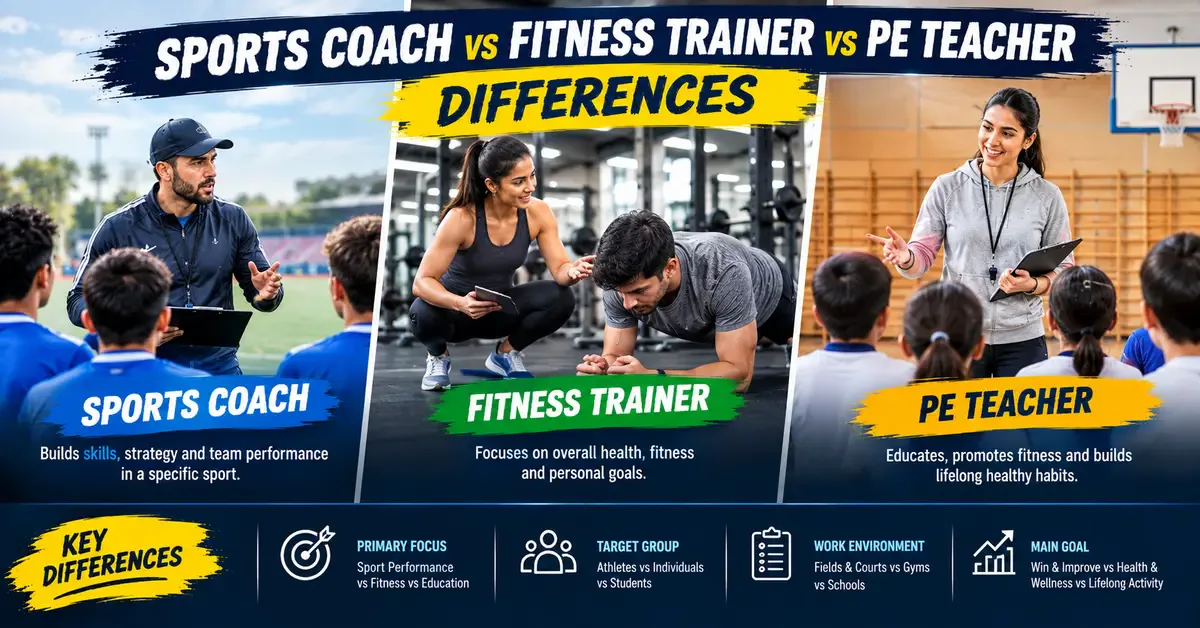
A sports coach usually teaches skills and decisions within a particular sport. A fitness trainer usually plans and teaches exercise or physical preparation. A PE teacher teaches physical education in a school setting, following the school's curriculum and the needs of a class. These are typical areas of focus, not walls between professions. One person may have training and experience in more than one role.
In this guide, trainer means a fitness or strength-and-conditioning professional. The word is also used for sport instructors and other roles, so always check what an individual actually teaches.
Sports Coach vs Fitness Trainer vs PE Teacher: At a Glance
| Question | Sports Coach | Fitness Trainer | PE Teacher |
| Main Setting | Club, academy, team, school or independent sessions | Exercise facility, team setting or independent sessions | School timetable and school activities |
| Usual Focus | Sport skills, tactics and practice | Exercise technique and physical preparation | Physical education across the school's programme |
| Who Takes Part? | Beginners, recreational players or competitors | People pursuing exercise or sport-preparation goals | Students in a school group |
| Example Session | Badminton footwork followed by a practice game | Movement and strength session shaped around a participant's goal | School lesson combining activity, skills and teamwork |
| Best First Question | “Do you teach my sport and ability level?” | “What kind of training do you plan and supervise?” | “What does the school PE programme cover?” |
The table helps you choose a first conversation. It does not describe every professional. A PE teacher may coach the school team; a coach may plan conditioning; a specialist trainer may work closely with athletes. The service and relevant preparation matter more than the title on a profile.
What does a Sports Coach Do?
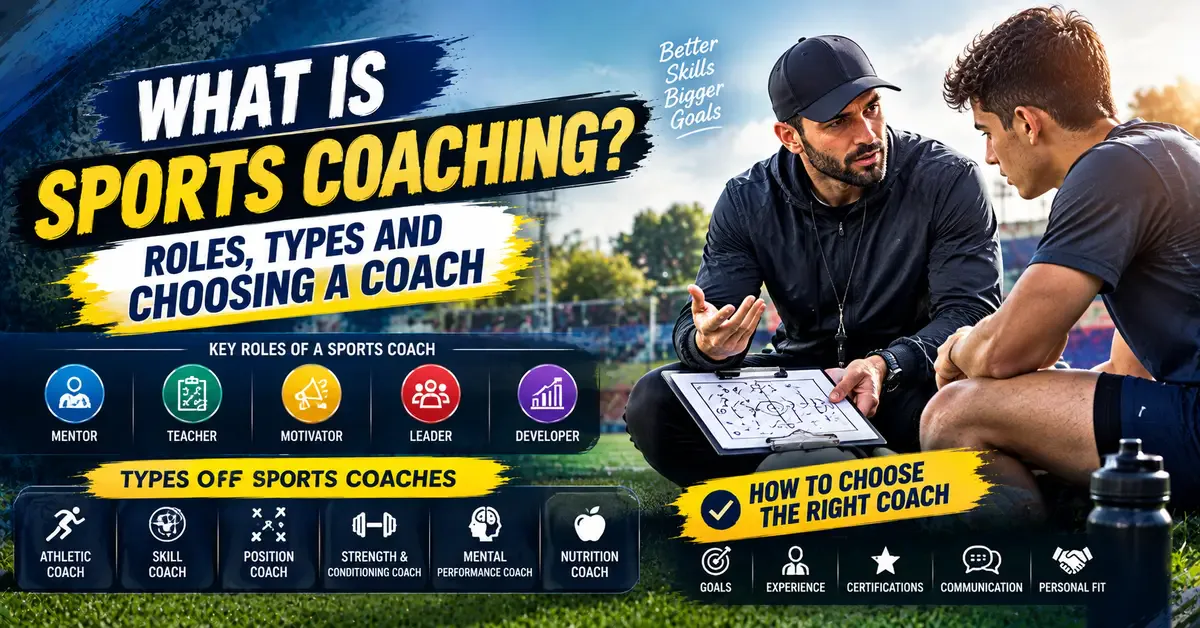
A sports coach teaches and organises practice in a sport. For a new badminton player, that could mean learning a grip, footwork and the rules before playing short games. For a more experienced player, it may involve shot selection, movement under pressure and feedback from match play. Coaches may teach one person, a group or a whole team.
Coaching can also include general physical preparation where the coach has the relevant experience. India's NSNIS Patiala — Diploma in Sports Coaching includes sport-specific practical learning alongside subjects such as strength and conditioning. That programme is one example of coach education, rather than a universal qualification held by everyone who coaches.
A sports coach is a useful first contact when your goal is specific: “Help me improve my cricket bowling action” or “Show my child the basics of football in a suitable group.” Ask how sessions are adapted to the participant's age and current level. Our guide to sports coaching and choosing a coach goes into those questions in greater detail.
What does a Fitness Trainer Do?
A fitness trainer helps someone practise exercise movements and follow a training plan that suits their goals and circumstances. A trainer may work with general exercise participants or, with suitable preparation, support an athlete's physical development.
A strength-and-conditioning coach is a more specific role that commonly works on the physical demands of sport. The UK Sports Institute — Strength and Conditioning explains how its specialists plan, deliver and review physical preparation for athletes; it describes a specialist practice, rather than an Indian licensing standard.
Picture a recreational footballer who wants better general movement and stamina between weekly matches. A trainer can discuss an appropriate training routine and guide exercise technique. A football coach, meanwhile, can work on passing choices, positioning and what happens during a match. Both roles may be useful, and some qualified professionals work across both areas.
The word trainer on its own tells you very little. Ask whether the person teaches general exercise, strength and conditioning, or the techniques of a particular sport. For an injury or a rehabilitation plan, seek an appropriately qualified healthcare professional who can assess that need.
What does a PE Teacher Do in India?
A physical education teacher works within a school's teaching programme. Lessons may cover movement skills, games, physical activity, teamwork and understanding how the body responds to activity. Depending on the school and age group, a PE teacher may also teach skills in a particular sport, prepare students for a competition or coach a school team.
India's ncert.nic.in gives physical education and well-being a defined place in learning.
The Central Board of Secondary Education — Physical Education Curriculum includes games and sports, practical work and learning objectives connected to physical activity. It would be misleading to describe every PE lesson as a light introduction with no sport-specific teaching.
The practical difference is the school role and audience: a PE teacher usually teaches students within the school's timetable, with aims set by its programme. If a child wants additional sessions in one sport outside that programme, a coach or a suitable sports academy may provide another route. Ask what the school already offers before duplicating it elsewhere.
Where do the Three Roles Overlap?
Consider a school football team. The PE teacher might teach general movement in class and also coach the team after school. Another sports coach could focus on team play. A strength-and-conditioning specialist could guide physical preparation. The people involved may work together, or one properly prepared person may cover more than one task.
Titles do not automatically establish a person's experience in every area. Use these questions instead:
-
What is the Aim of This Session? Sport skills, physical preparation and school learning are related, but each may require a different plan.
-
Who is the Session Designed For? Ask about age, experience, group size and how individual needs are handled.
-
What Experience Supports This Work? Ask about the relevant sport, training and previous work with similar participants.
-
How is Progress Discussed? A useful answer describes what will be practised and how feedback is given.
-
For a Child, How is the Session Supervised? Find out who leads it, how parents can communicate, and whom to contact with a concern.
A clear description of the actual session is more helpful than a broad claim to “train athletes.”
Which Person Should you Contact First?
To learn a particular sport: Begin with a sports coach or a group programme that teaches that sport. A beginner can start here; coaching is for more than competition.
To develop an exercise routine or physical preparation: Talk with a fitness trainer or an appropriately prepared strength-and-conditioning professional. Explain the sport you play, the activity you already do and the type of support you want.
To understand your child's school activity: Ask the school or PE teacher about its lessons, school-team sessions and the child's experience in them. This gives you a clearer starting point if you later consider activities outside school.
To prepare for a sports trial: A sport-specific coach can help practise the relevant skills. Physical preparation may also be part of a participant's plan. Read our guide to sports trials in India for questions to ask about the trial itself.
For example, a child who enjoys school badminton could continue PE lessons and attend a badminton group if more play time is appealing. An adult returning to cricket could combine occasional batting coaching with a suitable exercise routine. The best combination depends on the participant and what each provider actually offers.
Finding a Suitable Professional through Listing Sports
Use the sports coaches in India page or browse the sports-business directory to begin a search by sport and city. Read each profile's stated services carefully: some directory results describe academies or other organisations rather than an individual coach or trainer. Then contact the provider to discuss the session format, qualifications, location and availability.
A directory record is a starting point for a conversation. For a closer comparison of organisations rather than individual roles, read sports academy vs sports club vs coaching centre.
Frequently Asked Questions
Can a PE teacher also coach a team?
Yes. A school may ask a PE teacher to lead sport-specific practice or a school team. Ask the school which sessions are part of PE and which are additional team activities.
Are “sports coach” and “fitness trainer” interchangeable titles?
The terms are used differently by different providers. A coach may include conditioning in sport practice, while a trainer may specialise in athletes' physical preparation. Ask about the specific service, teaching experience and intended participant before deciding.
Does a child need individual coaching alongside school PE?
The answer depends on the child's interest, the school programme and the goal. Ask what the child enjoys and what the school offers, then consider a suitable group or individual session if more instruction or participation would help.
Who should I ask about returning to exercise after an injury?
Start with an appropriately qualified healthcare professional for an individual assessment. A coach or trainer can then work within guidance relevant to the participant's circumstances and the professional's own scope of practice.
The simplest way to choose is to describe the session you want, then find the person prepared to lead it. Start with your sport, location and goal. Compare the actual service behind each title before arranging a session.