
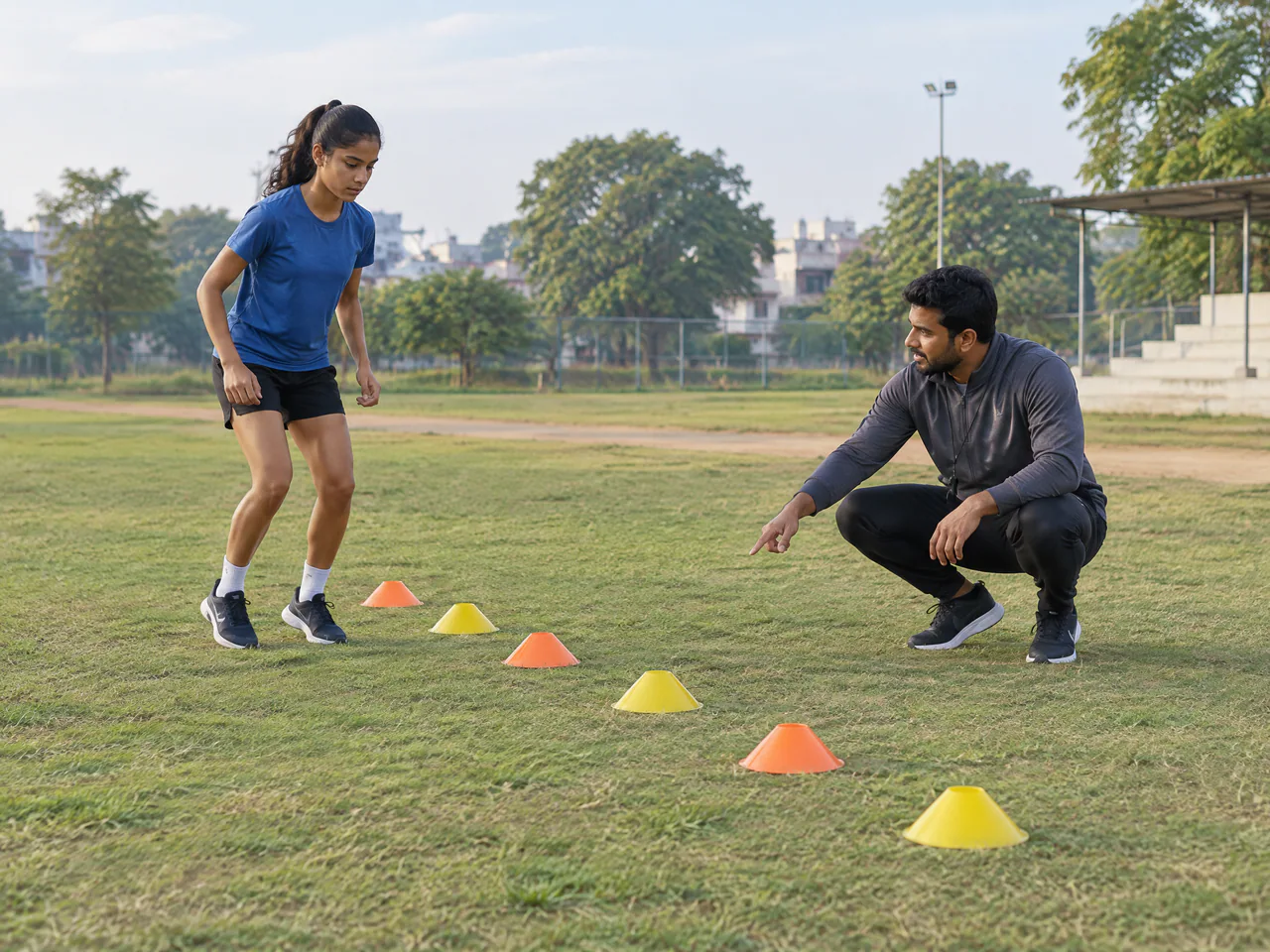
From check-in and warm-ups to selection and feedback, learn what to expect at a sports trial in India and how to prepare with a clear head.
The night before a trial is its own special kind of sleepless. You have trained for months, maybe years, and in a few hours a stranger with a clipboard will watch you for a handful of minutes and decide whether you move forward or go home. No wonder trials feel bigger than the sport itself.
Here is what nobody tells most first-timers clearly enough: trials are a process, not a mystery. Once you understand how they actually work, the nerves get easier to manage, and your preparation gets a lot more useful. The exact format varies by sport and organiser, so check the current notice before you go.
How to Check a Sports-Trial Notice Before You Apply
For sports trials in India, start with the organiser's current notice. Check the sport, age cut-off, achievement requirements and reporting date before booking travel. Prepare the exact documents requested, keep your application reference, and ask how results will be communicated. An old poster or forwarded message is not confirmation that applications are open.
1. Find the Organiser's Original Notice
Open the notice from the organiser's own website rather than relying on a cropped screenshot. For Sports Authority of India (SAI) trials, start with its official news page and follow the relevant notice or archive link. A news page can also contain staff recruitment and administrative announcements; check that the document is for athlete selection, not a job application. 1
Read the notice's year and trial dates. Look for a later correction, postponement or cancellation on the same official channel. A page appearing in search results today may describe a trial that ended months ago. If the dates or source disagree, confirm through contact details obtained independently from the organiser's website before paying or travelling.
2. Check Eligibility Before Making Travel Plans
Copy the age rule exactly. “Under 17”, a list of eligible birth years and “14–19 as on a specified date” are different instructions. Check the cut-off date, gender/category and discipline. Do not assume that reaching the stated age sometime this year makes you eligible.
Some trials require recognised competition results as well as an age condition. Check whether the notice asks for a state medal, a national placing or a specific achievement period. Read any exception separately: a committee's discretionary age relaxation is not automatic permission to attend. 2
If the notice is unclear about your documents or category, ask the organiser before you make a non-refundable booking. A coach can help you prepare, but cannot replace the organiser's eligibility decision.
3. Separate Registration, Reporting and Selection
An online application, a receipt and permission to attend are not the same as selection. Keep the application reference and check whether you need prior registration, a shortlist or walk-in reporting. Follow the stated process; there is no single application form for every Indian sports trial.
For a multi-day trial, check which day you must first report. The historical Kolkata athletics notice below required everyone to report on day one. The date range was not permission to arrive on any of its three days. 2
Confirm any stated fee, payment destination and receipt process through the official channel. Do not treat a promise of a “guaranteed selection slot” as proof of eligibility or an official result. Listing Sports does not register athletes, collect trial fees or arrange selection through this guide.
What Happens at a Sports Trial
A trial is an organised assessment where selectors evaluate players for a team, academy, league or higher level of competition. Despite the tension around them, many trials follow a fairly predictable structure. Always confirm the specific registration process, eligibility rules and schedule with the organiser.
- Registration and check-in: You arrive, confirm your details, and may receive a bib number or ID. This is also when age, category or eligibility documents may be checked.
- Warm-up: A group warm-up, sometimes led by the selectors, can also be an early observation window. Selectors may notice how players move and interact.
- Fitness assessment: Some trials include sprints, shuttle runs or endurance checks before sport-specific work begins.
- Skill and game-based evaluation: Players demonstrate technique, decision-making and game sense through drills or match-play situations.
- Results and communication: Results may be announced immediately, shared later by phone or email, or published by the organiser. Ask when and where you should expect an update.
Knowing the sequence in advance removes a big chunk of the “what do I even do first” anxiety.
What Selectors Are Actually Looking For
Selectors are rarely looking for the single flashiest player on the field. Criteria vary by sport, age group and trial, but they may consider a combination of factors.
Technical fundamentals matter more than tricks. Clean basics and consistency under pressure can stand out more than occasional brilliance mixed with frequent errors.
Game awareness shows in positioning, decision-making and understanding the game’s flow, not just individual skill in isolation.
Fitness and work rate show whether a player can sustain an effort throughout the session, not just make one standout play.
Coachability and attitude come through in how you respond to instructions, handle mistakes and interact with others during the trial.
Consistency across the session matters. A player who performs steadily in drills and match situations may make a stronger impression than one with a single excellent moment surrounded by inconsistency.
How to Prepare Physically
Physical preparation should start ahead of the trial rather than the night before. The Children’s Health sports-tryout guidance also cautions athletes against turning up overworked.
- Build a fitness base early. Avoid cramming intense training into the final week; that can add fatigue instead of sharpness.
- Practise the specific format. If the organiser expects small-sided games, practise that format rather than only full matches.
- Simulate trial conditions. Train at a similar time of day and, where possible, on a similar surface.
- Ease off before the day. Adjust your final sessions with your coach so you arrive fresh rather than exhausted; there is no single taper that suits every sport or athlete.
- Prioritise sleep and hydration. Bring water and follow the event’s conditions and your usual training routine. The NCAA’s athlete sleep and hydration resources explain why recovery and fluid intake deserve attention.
How to Prepare Mentally
The technical side of a trial is only half the challenge. Mental preparation helps you use the ability you have built under pressure.
- Expect nerves, do not fight them. Some tension is normal. Trying to force calmness can make you focus on the nerves instead of the sport.
- Focus on process, not outcome. Concentrate on executing your basics rather than constantly wondering whether you will be selected.
- Prepare for mistakes. Errors happen. Recover quickly instead of letting one moment shape the rest of your session.
- Visualise the format. Mentally walk through likely drills or match situations so fewer things feel unfamiliar on the day.
- Talk to your coach beforehand. A coach familiar with the sport’s selection process can help you plan your preparation.
What to Carry and Check the Day Before
Simple logistics mistakes cause avoidable stress on trial day. The evening before, confirm the venue address and reporting time, required documents such as age proof, ID or school certificates, correct kit, footwear and any equipment specified by the organiser. Plan your transport with a buffer for delays. Use the organiser’s current notice as the final authority on eligibility, documents and fees.
Arriving rushed or underprepared adds unnecessary pressure before you have even started warming up.
A Document Checklist to Complete From Your Notice
Use this as a worksheet, not a universal mandatory document list. Different notices request different items and formats. Fill it in from the trial you are actually attending; do not assume that a phone photo replaces an original. 2 3 4
| Item to check | What to confirm in your notice |
|---|---|
| Age proof | Accepted document, issuing authority and exact cut-off date |
| Identity proof | Accepted ID and whether an original is required |
| Sports achievements | Competition level, date window and whether certificates are mandatory or “if any” |
| Education records | Whether certificates or mark sheets are requested |
| Medical fitness document | Whether required, its format and any stated validity period |
| Copies and photographs | Number of copies, self-attestation and photograph requirements |
| Application evidence | Form, reference number, shortlist or attendance confirmation, if required |
| Kit and footwear | Discipline-specific shoes, equipment and any venue restrictions |
| Travel and stay | Reporting gate/time and whether participants must arrange their own accommodation |
Match your name and date of birth across the documents. If they differ, ask what supporting evidence the organiser accepts; do not alter a certificate to make it fit. Keep originals secure and share copies only through the stated official process. For a child, a parent or guardian should check the registration and attendance instructions with them.
What Two Past Official Notices Show
These are historical examples, not current openings. Both trial date ranges had passed when checked on 12 October 2026. They show why you must read the full notice rather than copy another athlete's checklist.
| Historical notice | Notice-specific requirement | Practical lesson |
|---|---|---|
| SAI NCOE Kolkata athletics, 11–13 August 2026 | Age 14–19 as on 11 August; state medal or top-eight national final in recognised competitions in the previous two years; first-day reporting compulsory | Age alone did not establish eligibility, and arriving on a later day was not allowed. 2 |
| SAI NCOE Guwahati male football, 13–19 July 2026 | Birth years 2012–2015; originals and self-attested photocopies; three photos; warm-up shoes and football studs | Document format and equipment were specific to this trial. Participant boarding and lodging were not provided. 3 |
The Kolkata notice listed two photographs and a medical fitness certificate “if available”. A separate July 2026 SAI Central Regional Centre notice listed four photographs and a medical fitness certificate. Neither list is a nationwide rule. Follow the requirements in your current notice, including any later correction. 2 4
Also separate programme benefits after admission from facilities for trial participants. A residential programme description does not mean that visitors can stay on campus during the trial. 3
Handling the Outcome, Either Way
If you get selected, treat it as the start of harder work, not the finish line. Trials open a door; consistent training keeps you moving through it.
If you do not get selected, resist the urge to treat one day as a final verdict on your ability. Trials are a snapshot under specific conditions. Ask for feedback if the organisers offer it, identify one or two areas to work on, and look for the next opportunity rather than stopping altogether.
A Result and Follow-Up Checklist
Before leaving, note your bib or application reference and ask where results will appear. Confirm whether a published list is final selection, a shortlist for another stage or provisional admission subject to checks. There is no universal result deadline for sports trials in India.
Check the organiser's stated website, notice board or communication channel. Match the trial date, discipline and category before looking for your name or number. A list from another centre or year does not answer your application.
If the stated result date passes without an update, use the official enquiry route and include your reference. Ask whether another assessment or document check is pending. If you are selected, confirm the acceptance deadline and joining requirements. If you are not selected, request feedback where offered and check any published review or repeat-trial process; neither an appeal nor a fresh attempt is automatically available.
Keep identity documents and payment information out of public comments or group chats. A personal message promising admission should be checked against the organiser's official process before you act on it.
Finding Trials and Preparing With the Right Support
To keep up with trial notifications, check the relevant sport’s official organisers and your academy or club. The Khelo India competitions page is an official starting point for its own competitions; it is not a complete list of every trial in India. You can also browse upcoming sports events on Listing Sports by sport and city, but confirm each trial’s details and application process with its organiser before travelling or paying.
If you need more focused support before a trial, compare sports coaches in India and sports academies in India. Short-term coaching can complement, rather than replace, your regular training. If you are still deciding where to train, our academy, club and coaching centre comparison can help you choose a suitable format.
Frequently Asked Questions
How long before a trial should I start preparing?
Start by checking the notice and your current training routine. There is no single preparation period that suits every athlete or sport. Ask your coach what you can realistically adjust before this trial, and avoid cramming unfamiliar or exhausting sessions into the final days. The aim is to arrive prepared and recovered, not to complete an arbitrary number of weeks.
What should I do if I feel extremely nervous on trial day?
Focus on your warm-up routine and basic execution rather than the outcome. Familiar breathing and pre-game routines may help you settle before your turn.
Can I retake a trial if I am not selected?
Often, yes, if the organiser offers another trial and you remain eligible. Check that trial’s rules and dates rather than assuming every event allows a repeat attempt.
Do selectors only look at the best player on the field?
Not necessarily. Depending on the sport and selection criteria, selectors may consider skill, fitness, game awareness and attitude across the full session, not a single standout moment.
Is There One Age Limit for Sports Trials in India?
No. The relevant scheme, sport and organiser set the rule for each notice. Read its cut-off date or birth-year range alongside achievement and category conditions. The historical examples above have different age instructions; neither should be reused for a new trial. 2 3
Do I Need to Bring Every Document in This Checklist?
Bring what your current notice asks for, in the stated form. Some documents may be conditional. If an item or accepted alternative is unclear, confirm before reporting rather than assuming a photocopy or phone image is enough. 2 3 4
Does an Application Receipt Mean I Have Been Selected?
No. A receipt records an application or payment, not the selection decision. Check whether your notice requires eligibility screening, attendance at the trial or another stage, then follow its official result process.
Prepare Well, Then Let the Trial Speak for Itself
A trial asks you to show what you have already built through training. Listing Sports helps you find academies, coaches and events across Indian cities, so you can prepare with the right support and look for opportunities in your sport and city. For more ways to find a local option, read our guide to finding sports activities in India.
Do the work beforehand, walk in with a clear head, and let your preparation take over from there.
References
Official notice examples checked on 12 October 2026. Historical dates are included to explain preparation, not to advertise active registrations.
Editorial illustration — not evidence of a visit to a venue or attendance at an event.