Every Olympic champion starts somewhere. Before the medals, national anthems and packed stadiums, there are early-morning training sessions, local competitions and young athletes working towards a dream that can take years to achieve.
The Youth Olympic Games give some of the world's most promising young athletes an opportunity to compete internationally, represent their countries and experience the Olympic spirit while still developing their sporting careers.
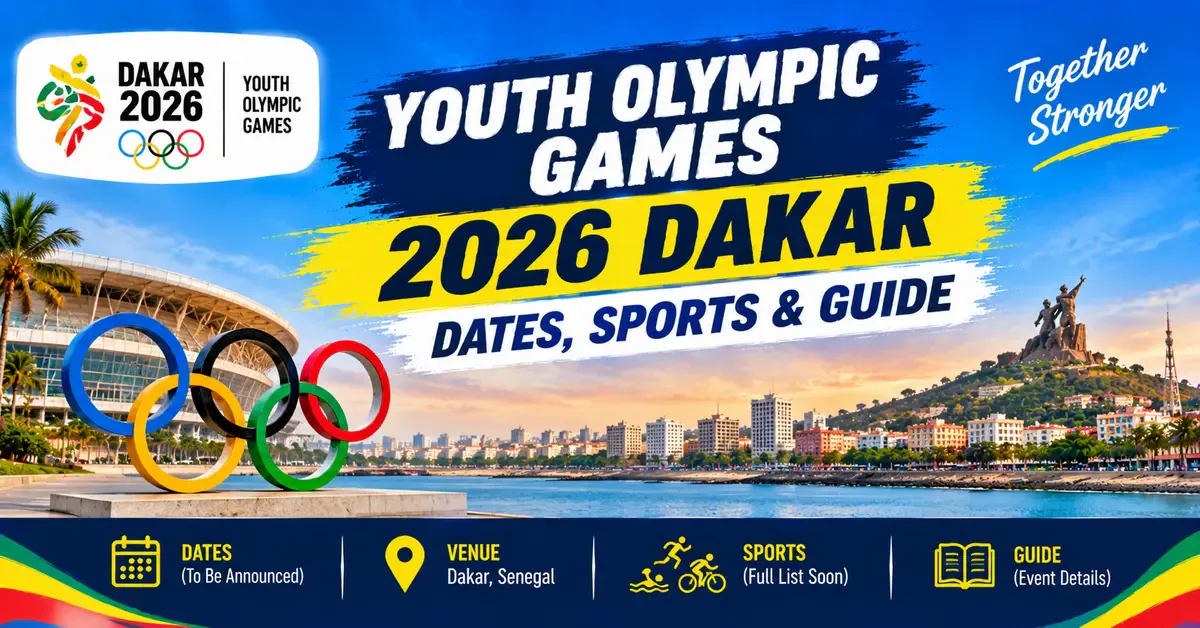
In 2026, the spotlight is on Dakar, Senegal, where the Summer Youth Olympic Games bring together young athletes from across the world. The event also marks a historic milestone: it is the first Olympic sporting event hosted on the African continent. The official event dates are 31 October to 13 November 2026.
From the competition schedule and sports programme to the event's history and opportunities for aspiring athletes, here is what you need to know about the Youth Olympic Games 2026.
What are the Youth Olympic Games?
The Youth Olympic Games, commonly known as the YOG, are international multisport competitions organised under the International Olympic Committee's Youth Olympic Games programme.
They were created to give talented young athletes an international competition experience while combining sport with education, cultural exchange and personal development.
Like the traditional Olympic Games, the Youth Olympics bring together athletes representing different countries and sporting traditions. However, the event places additional emphasis on helping young participants learn about fair play, respect, teamwork and the responsibilities that come with competing at an international level.
The Youth Olympic Games have two editions:
- Summer Youth Olympic Games: Feature sports such as athletics, badminton, swimming, gymnastics, cycling and football, with formats varying by edition.
- Winter Youth Olympic Games: Focus on winter sports, including skiing, ice hockey, figure skating and other disciplines included in the programme.
The Games generally take place on a four-year cycle for each season. Dakar's postponement created an exception to the usual Summer sequence.
For young athletes, participation can be an important step in their development. However, entering the Youth Olympics requires meeting sport-specific eligibility requirements and national selection criteria. It is not an open-entry competition.
For a broader introduction to organised competitions, our guide explains what counts as a sports event and how different event formats work.
Youth Olympic Games 2026: Dates and Host City
The fourth Summer Youth Olympic Games take place in Dakar, Senegal, from 31 October to 13 November 2026, as confirmed on the official IOC Dakar 2026 page.
The event was originally planned for 2022 but was postponed to 2026 following the disruption caused by the COVID-19 pandemic. The IOC's postponement and host-city FAQ explains that decision.
Dakar was selected as the host city in 2018. Its selection represents a major milestone for African sport, bringing an Olympic sporting event to the continent for the first time.
Here are the key details of the 2026 edition:
| Event Detail | Information |
| Event Name | Summer Youth Olympic Games 2026 |
| Official Edition | Fourth Summer Youth Olympic Games |
| Host City | Dakar |
| Host Country | Senegal |
| Dates | 31 October–13 November 2026 |
| Calendar Span | 14 days, including both dates |
| Athlete Quota | 2,700 |
| Competition Sports | 25 |
| Additional Engagement Sports | 10 |
| Governing Organisation | International Olympic Committee |
| Official Edition Name | Dakar 2026 |
| Official Motto | Africa Welcomes, Dakar Celebrates |
The athlete figure is the published quota, not an independently counted final attendance total.
The competitions take place across three host zones: Dakar, Diamniadio and Saly. The IOC's Dakar 2026 venue guide explains which sports are assigned to each zone.
The event also features educational and cultural activities designed to help athletes learn from one another and experience Senegalese culture.
For fans, Dakar 2026 is an opportunity to watch emerging sporting talent. For the host country, it is a chance to present its sporting infrastructure and culture through an international competition.
Why are the Dakar 2026 Youth Olympic Games Historic?
Dakar 2026 is more than another edition of an international sporting competition. It represents a significant moment for the Olympic movement and African sport.
1. The First Olympic Sporting Event in Africa
No African country had hosted an Olympic Games or Youth Olympic Games before Dakar 2026.
By hosting Dakar 2026, Senegal becomes the first African nation to stage an Olympic sporting event. This creates an opportunity to bring international sporting attention to the region and encourage greater participation among young people.
2. A Platform for Young Sporting Talent
The Youth Olympics give emerging athletes an opportunity to compete against international opponents and experience the demands of elite sport.
For many participants, the event can help them understand the standards required to progress towards senior international competitions.
It can also provide valuable experience in handling pressure, following competition schedules and representing their countries.
3. Sport Beyond Competition
The Youth Olympic Games combine sporting events with educational and cultural programmes.
Athletes can learn about other cultures, interact with competitors from different backgrounds and participate in activities that promote respect, friendship and responsible sporting behaviour.
This broader approach distinguishes the Youth Olympics from competitions focused exclusively on medals and results.
4. Greater Visibility for Different Sports and Formats
The Youth Olympic Games have provided an international stage for sports and formats that have subsequently gained attention at senior Olympic level.
The programme has included disciplines such as breaking and 3x3 basketball, helping introduce younger audiences to different forms of sporting competition.
Dakar 2026 continues this approach through its competition programme and additional engagement sports.
Which Sports are Included in the Youth Olympic Games 2026?
The Dakar 2026 programme features 25 competition sports and 10 additional engagement sports. The official IOC sports programme distinguishes the two groups and identifies the competition formats.
The competition programme brings together established Olympic disciplines and sports that appeal to younger participants.
Competition Sports
The 25 competition sports and their selected disciplines or formats are:
- Archery
- Athletics — track and field
- Aquatics — swimming
- Badminton
- Baseball — Baseball5
- Basketball — 3x3
- Boxing
- Breaking
- Cycling — road cycling
- Equestrian — jumping
- Fencing
- Football — futsal
- Gymnastics — artistic gymnastics
- Handball — beach handball
- Judo
- Rowing — coastal rowing
- Rugby — rugby sevens
- Sailing
- Skateboarding — street
- Table tennis
- Taekwondo
- Triathlon
- Volleyball — beach volleyball
- Wrestling — beach wrestling
- Wushu
These distinctions matter. Football at Dakar 2026 means futsal, rather than the standard 11-a-side format. Handball is beach handball, and volleyball is beach volleyball.
Additional Engagement Sports
Dakar 2026 also includes an engagement programme featuring:
- Canoe-kayak
- Golf
- Hockey
- Karate
- Modern pentathlon
- Shooting
- Sport climbing
- Surfing
- Tennis
- Weightlifting
These activities are intended to encourage young people in Senegal and the wider region to discover and participate in additional sports.
The distinction matters: these 10 engagement sports are part of the broader youth participation programme and should not be confused with the 25 sports in the main competition programme.
For aspiring athletes, the range of sports highlights how many different pathways exist within organised sport. A young person may find their strongest fit in an individual discipline, a team sport or a sport that receives less attention in their local community.
Youth Olympic Games History: From Singapore to Dakar
The Youth Olympic Games were introduced to create a global sporting event specifically designed for young athletes.
The Summer edition began in Singapore in 2010. Since then, the competition has developed into an international platform combining sporting performance with education and cultural exchange.
Here is a look at the Summer Youth Olympic Games editions:
| Edition | Host City | Country | Year |
| First Summer Youth Olympic Games | Singapore | Singapore | 2010 |
| Second Summer Youth Olympic Games | Nanjing | China | 2014 |
| Third Summer Youth Olympic Games | Buenos Aires | Argentina | 2018 |
| Fourth Summer Youth Olympic Games | Dakar | Senegal | 2026 |
The 2026 edition follows an eight-year gap since Buenos Aires 2018, as the planned 2022 edition was postponed.
The Winter Youth Olympic Games follow a separate sequence. Their editions have been held in Innsbruck, Lillehammer, Lausanne and Gangwon.
Together, the Summer and Winter events give young athletes opportunities to compete internationally across a broad range of disciplines.
What is the Age Limit for the Youth Olympic Games?
The Youth Olympic Games are designed for young athletes, but the exact age requirements depend on the edition and the rules of each sport.
For Dakar 2026, the IOC states that the maximum participant age is 17 at the time of the Games. Sport-specific age and birth-date requirements still need to be checked against the relevant international federation's rules. A generic “15–18” description should not replace the current Dakar requirements.
Athletes must also meet their national Olympic committee's selection requirements.
This means that being interested in a sport or performing well at a local competition is not enough on its own to secure participation.
Young athletes should understand three key requirements:
- Age Eligibility: Check the age range and birth-date requirements for the specific sport and edition.
- Sport-specific Sporting Criteria: Each international federation establishes minimum sporting and eligibility criteria for its events.
- National Selection: The relevant national federation and national Olympic committee oversee selection according to the applicable rules.
For Dakar 2026, the revised IOC framework removes the requirement for YOG-specific qualification events. That does not mean anyone can register directly; athlete selection remains subject to the participation framework and the applicable sporting criteria.
For Indian athletes, the relevant national sports federation is an important starting point for understanding these requirements. The Indian Olympic Association is India's national Olympic committee.
Parents and coaches should check official selection documents rather than relying on general age guidelines. Eligibility can differ between sports, and missing a selection deadline can affect an athlete's opportunity to participate.
How can Young Athletes Work Towards the Youth Olympic Games?
For young athletes who dream of representing their country, the path towards an international competition begins well before selection. With Dakar 2026 already in its scheduled Games window, the points below describe long-term athlete development, not a last-minute application route for this edition.
There is no single route that applies to every sport, but several steps can help athletes build a strong foundation.
1. Choose a Sport and Find the Right Training Environment
The first step is identifying a sport that matches the athlete's interests, abilities and long-term goals.
A suitable training environment provides access to qualified coaches, appropriate facilities and a structured development programme.
For example, a young badminton player may need regular court access, technical coaching and opportunities to compete in recognised tournaments. An aspiring swimmer will need suitable swimming facilities and sport-specific training.
The right academy or coach can help establish the fundamentals and identify areas for improvement. If you are unsure which type of provider you need, read our comparison of an academy, coach, club or venue.
2. Build Fundamental Skills Before Chasing Results
Young athletes need time to develop technical ability, fitness, coordination and an understanding of competition rules.
Trying to accelerate progress without a strong foundation can lead to inconsistent performance and unnecessary pressure.
Training should be appropriate for the athlete's age and stage of development, with adequate recovery and attention to overall well-being.
3. Participate in Recognised Competitions
Local and regional competitions can provide experience and help athletes understand the demands of organised sport.
As their performance develops, athletes may progress to district, state, national and international events, depending on the sport's competition structure.
Participation and selection routes vary. For Dakar 2026, the IOC framework does not require dedicated YOG qualifying events; do not label a local event as a Youth Olympic qualifier unless the relevant official documents support that claim.
Our guide to sports trials in India explains preparation basics. It is not a Dakar 2026 eligibility rulebook.
Athletes should follow the pathway published by their respective national federation.
4. Track Eligibility and Selection Requirements
Eligibility criteria and selection deadlines are not the same across all sports.
Athletes and coaches should monitor official announcements from the relevant sports federation and national Olympic committee.
These organisations provide information about selection procedures, performance standards and documentation requirements. For Indian team announcements, use official Indian Olympic Association news alongside your sport's federation notices.
5. Develop Consistency and Competitive Experience
International competitions demand more than technical skill.
Athletes also need to manage pressure, adapt to unfamiliar opponents, follow competition schedules and maintain focus across multiple rounds or events.
Regular training, appropriate competition exposure and guidance from qualified coaches can help young athletes prepare for these demands.
The Youth Olympic Games should be viewed as one possible milestone in a longer sporting journey, rather than the only measure of success.
How can Indian Athletes Find Sports Academies and Training Facilities?
India has a large network of sports academies, training centres, coaches and local competitions. Finding the right option, however, requires more than choosing the nearest facility.
The right training environment depends on the sport, the athlete's age, their current ability and their long-term goals.
Before joining an academy, consider the following:
- Coaching Qualifications: Check the coach's credentials and experience with athletes at a similar stage.
- Training Facilities: Confirm that the academy has the equipment and infrastructure required for the sport.
- Competition Opportunities: Ask whether athletes participate in recognised local, state or national competitions.
- Training Schedule: Review the programme's frequency, duration and suitability for school or other commitments.
- Athlete Development: Understand how the coach assesses progress and plans the next stage of training.
- Safety and well-being: Look for appropriate supervision and age-appropriate training.
This is where Listing Sports can help with discovery.
As a sports listing platform in India, Listing Sports provides starting points for exploring sports academies in India, finding sports coaches in India and comparing sports venues in India.
Parents looking for a badminton academy, aspiring footballers searching for training facilities or young athletes exploring local sporting opportunities can use sports listings as a starting point for finding relevant options.
Listing Sports is a directory, not an Olympic selection body. Its listing policy explains that it does not certify, accredit or endorse providers. Joining a listed academy does not guarantee Youth Olympic eligibility or selection.
Instead of treating international competitions as distant ambitions, young athletes can begin by identifying suitable training opportunities in their own cities.
How to Follow the Youth Olympic Games 2026
The Youth Olympic Games bring together athletes competing across multiple sports and venues, making official schedules and results useful for following the event.
Here are the main ways to stay informed:
- Follow the Official Games Website: The Dakar 2026 hub on Olympics.com provides event information, news and links to official coverage.
- Check the Competition Timetable: Use the official Dakar 2026 schedule and results to find sessions and published results, rather than relying on an old calendar.
- Follow Individual Sports Federations: International federations provide discipline-specific rules and updates.
- Check National Olympic Committee Announcements: National Olympic committees provide updates about their teams and participating athletes.
- Review Results by Sport: If you follow a particular discipline, its official results and schedules can make it easier to track individual athletes and medal events.
Competition schedules may change, so official event updates should take priority over older schedules published elsewhere. Check the timezone displayed before converting session times for India.
Frequently Asked Questions
What are the Youth Olympic Games?
The Youth Olympic Games are international multisport competitions organised under the International Olympic Committee. They bring together young athletes and combine sporting competition with educational and cultural activities.
When are the Youth Olympic Games 2026?
The Summer Youth Olympic Games in Dakar, Senegal, take place from 31 October to 13 November 2026.
Where are the Youth Olympic Games 2026 being held?
The Games are held in Senegal, with competitions taking place across Dakar, Diamniadio and Saly.
Why are the Dakar 2026 Youth Olympic Games historic?
Dakar 2026 is the first Olympic sporting event hosted on the African continent, marking an important milestone for African sport and the Olympic movement.
How many sports are included in Dakar 2026?
The main competition programme includes 25 sports. A further 10 sports are part of the engagement programme.
Which sports are included in the Youth Olympic Games 2026?
The programme includes athletics, badminton, swimming, archery, boxing, artistic gymnastics, futsal, basketball 3x3, road cycling, fencing, judo, rugby sevens, skateboarding, table tennis and other disciplines. The competition list above identifies all 25 sports and their selected formats.
What is the age limit for the Youth Olympic Games?
For Dakar 2026, the IOC states a maximum age of 17 at the time of the Games. Athletes must also satisfy their sport's specific age, sporting and national selection requirements.
How can Indian athletes qualify for the Youth Olympic Games?
Indian athletes must follow the eligibility and national selection framework applicable to their sport and the relevant edition. For Dakar 2026, dedicated YOG qualification events are not required under the revised IOC framework, but minimum sporting criteria and national selection still apply. Check the relevant federation and Indian Olympic Association notices.
Are the Youth Olympic Games held every year?
Summer and Winter Youth Olympic Games generally follow a four-year cycle for each season. Postponements can alter that sequence, as happened with Dakar.
How can young athletes find sports academies in India?
Young athletes and their parents can explore local sports academies, coaches and training facilities through Listing Sports. They should verify coaching credentials, facilities, schedules and competition opportunities before choosing a programme. A directory listing is not proof of Olympic accreditation or a selection guarantee.
Help Young Athletes Take Their First Step with Listing Sports
Every international athlete begins with a first lesson, a first competition and a decision to keep improving.
The Youth Olympic Games demonstrate what young athletes can work towards when training, preparation and competitive opportunities come together. But the journey starts much earlier, often at a local academy, sports club or training facility.
For parents, coaches and aspiring athletes, finding the right sporting environment is an important first step.
Explore Listing Sports to discover sports academies, coaches, courts, clubs and events across India. Check each provider's current programmes and access conditions directly, then look for options that fit the athlete's needs.
The road to international competition starts with the opportunities available today.