
A sports event is an organised occasion for sport. Compare knockout, round-robin, group and league structures, with match-count examples and checks before joining an event in India.
A sports event is a planned occasion where people play, compete, learn or gather around a sport. It could be a one-day badminton tournament, a series of league fixtures, a marathon or a school sports day. What makes it an event is the organised occasion: someone sets its purpose, schedule and participation details. It does not have to be a major championship.
For someone looking to take part, the event's name is only a starting point. A “football tournament” may accept open entries, invite selected teams or be limited to a particular age group. The organiser's current notice—not a generic directory description—should settle that question.
What Counts as a Sports Event?
Most in-person sports events identify an organiser, a date or date range, a location and a format. They also explain who may participate or attend. Some have entry fees and registration deadlines; others are free, invitation-only or open to spectators without registration. An event may use several venues, and a virtual participation challenge need not have one physical venue.
That is different from an ordinary recurring training session. A club's weekly practice is a regular activity. Its announced open day or annual competition is an event with a distinct purpose and schedule. Neither has to be competitive.
What are the Main Types of Sports Events?
People use “types” to mean several things: what happens at an event, who can enter and how it is run. The categories below describe its main purpose. An event can fit more than one; a school tournament, for example, is both a school event and a competition.
Tournaments and Championships
A tournament brings players or teams together for a defined competition. It may use knockout rounds, groups, round-robin play or a combination. A championship is also a competition, but its name does not automatically tell you whether it is open entry or restricted to qualified participants.
If you hope to enter, check the sport's rules, age or ranking categories, team size, entry deadline and who issues the results. The Athletics Federation of India's official event listings show how a governing body publishes named competitions and their scheduled dates; use the current organiser notice for entry requirements.
Leagues and Scheduled Fixtures
A league usually connects a series of fixtures across a season. Teams may play repeatedly under a points or standings system. A single league match can be an event on a calendar, but the league as a whole runs over multiple dates. Ask whether a listing refers to one match, a registration window or the entire season.
Races and Participation Events
Road races, cycling rides, walks and some swimming events may have separate distances or categories. A marathon is a particular running distance; it is not a catch-all name for every running event. Some races target experienced competitors, while others have recreational categories. Do not assume that an event is beginner-friendly just because it is advertised publicly.
For athletics, the World Athletics calendar and results service distinguishes disciplines such as road running, track and field and cross country. Its calendar covers events within its stated scope; it is not a list of every local race in India.
Trials and Selection Events
A trial is organised to assess participants for a team, academy or programme. It is not the same as a public tournament: selection criteria, documents, age eligibility and result announcements may matter more than a match score. Our guide to sports trials in India explains what to check and how to prepare. Always use the organiser's latest notice as the authority for a specific trial.
Camps and Coaching Clinics
A camp or clinic centres on instruction and practice. It may last one day or several days, and it may include games without being a formal competition. Before joining, ask which coach or organisation is running it, the participant age range, supervision arrangements, equipment needs and what the price covers.
Community, School and Charity Events
A sports day, exhibition match or fundraiser can be designed for participation, spectators or both. Some accept walk-ins; others require permission from a school, an invitation or advance registration. “Community event” is not a guarantee of free entry or open access.
Types of Sports Tournaments: Knockout, Round Robin and League Formats
The main types of sports tournaments use knockout, round-robin or a combination of stages. Knockout removes an entry after a loss. Round robin schedules every entry against the others. A league describes a competition across fixtures; it may use round robin, an uneven schedule or playoffs. Check the published rules, not just the event's label. 1
| Structure | How it works | Useful when | Main trade-off |
|---|---|---|---|
| Single-elimination knockout | Winners advance; a losing entry leaves the main draw. | Court or ground time is limited, or a playoff needs one winner. | An entry may leave after one match. |
| Single round robin | Each entry plays every other entry once; standings decide the result. | A small field needs several scheduled matches per entry. | The match total grows quickly as entries increase. |
| Groups followed by knockout | Entries play within groups; qualifiers advance to an elimination stage. | You want group-stage participation and a deciding final. | Group allocation, qualifying places and tie-break rules need care. |
| League with scheduled fixtures | Results accumulate across a series of fixtures. The schedule may be single or double round robin, or another arrangement. | A competition is spread over multiple dates. | Attendance, venue availability and any playoff rules must work across the schedule. |
A match format is different from a tournament format. “Best of three” describes how one match is decided; “round robin” describes whom each entry plays. Doubles versus singles, age groups and open versus invitation-only entry are separate questions too.
Knockout: fewer matches, less room for a bad start
For eight entries, a complete single-elimination bracket has four quarterfinals, two semifinals and one final: seven matches. Every match removes one entry until a winner remains. That count excludes qualification, a third-place match and consolation games. A bye is advancement without a played match, not an extra fixture.
This is a practical option for a short local badminton or football competition when the priority is deciding a winner. It is less suitable if the main promise is plenty of playing time. Do not advertise multiple matches for everyone unless the actual schedule provides them. Consolation play can add opportunities, but it changes the programme and does not automatically put a losing entry back in contention for the main title. 1
Round robin: more scheduled play, more venue time
In a single round robin, eight entries each face seven opponents. That produces 28 matches, not 56: counting each entry's seven opponents would count every pairing twice. A double round robin schedules each pairing twice and produces 56 matches.
Standings need published rules. Explain points for a win or draw where applicable, how ties are separated, and what happens if an entry withdraws or does not attend. Do not assume that football and badminton use the same scoring or tie-break procedure.
Groups plus knockout: publish the route to the final
Consider eight entries split into two groups of four, with the top two from each group qualifying. Each group has six single-round-robin matches, so the group stage has 12 matches. Two semifinals and a final bring the total to 15 matches. Each entry has three scheduled group matches; withdrawals or cancellations can still reduce actual play.
Group allocation matters because entries do not face everyone in the field. Publish whether allocation is seeded or drawn, which places qualify and how tied standings are resolved. The official 2026 ITF junior rule-change summary gives a sport-specific example of eight round-robin groups followed by elimination at eligible J30/J60 tournaments; that structure is specific to those rules. That is an example within those rules, not a format required for every tennis or local sports event. 2
A league is not automatically a double round robin
A league may schedule opponents once, twice or in another pattern, then award a title through standings or playoffs. Its name alone cannot tell you the match total. Ask for the fixture list, the points system and any final-stage rules. A “league-cum-knockout” local competition usually means a group or standings phase followed by elimination, but the organiser should state the actual structure.
How Many Matches Can Your Tournament Fit?
Start with actual entries and the published stages. For a completed schedule with no extra placement or consolation games, the basic calculations are:
| Schedule | Calculation for n entries | Eight-entry example |
|---|---|---|
| Single-elimination main draw | n − 1 | 7 matches |
| Single round robin | n × (n − 1) ÷ 2 | 28 matches |
| Double round robin | n × (n − 1) | 56 matches |
| Two groups of four; top two qualify | 2 × 6 group matches + 2 semifinals + 1 final | 15 matches |
These are schedule calculations, not promises that every game will be played. No-shows, walkovers, replays and format changes need separate treatment. For a different group size or qualifying rule, recalculate each stage rather than reusing the example total.
Suppose a planning exercise allows 30 minutes per match slot, including changeover. A 28-match round robin needs 14 court-hours. Two available courts provide an arithmetic lower bound of seven hours if both can be used throughout. That is not a seven-hour finish-time guarantee. The same players cannot be on two courts at once; rest, overrunning matches and stage dependencies can leave courts idle. Thirty minutes is an illustrative assumption, not a recommended duration for a particular sport.
Before promising a finish time, build the actual fixture sequence. Confirm usable courts or grounds, reporting time, match rules, participant rest and a delay allowance with the venue and relevant competition officials. Sport New Zealand's general club-event guidance supports planning resources, a running sheet and contingencies; local requirements still need separate confirmation. 3
For a group arranging a ground rather than entering a public tournament, our weekend turf-football booking guide covers the booking workflow. A booked playing slot does not by itself establish an official competition or open registration.
How is a Sports Event Organised?
The details vary with the scale of the occasion, but the basic tasks are familiar: decide its purpose and format, secure a suitable space, communicate entry rules, prepare the schedule, run the activity and publish changes or results where relevant.
Sport New Zealand's event-management guide for clubs describes planning, preparation, delivery and evaluation as useful stages. It is general planning guidance, not an Indian permit or safety rulebook.
Organiser, venue and event are different things. One organisation can run several events at different locations; a venue can host events from many organisers. If the address or access rules are unclear, our sports-venue guide explains what to confirm about the actual playing space.
What Should you Check before Registering or Travelling?
A listing can help you discover an event, but it may not reflect a last-minute change. Check these details against the official organiser page or contact:
-
Date and Status: Is the date written in full, including year? Is the event still taking place, or has it been postponed or cancelled?
-
Exact Location: Is the venue address complete? For a race, where are the start and finish points?
-
Entry Terms: Is it open entry, a qualification event, an invitation or a spectator-only occasion? What are the age and category requirements?
-
Cost and Deadline: What is the full charge, the last day to register and the refund or transfer policy?
-
On-the-day Details: When should you report, what should you bring, and how will schedule changes be announced?
-
For Children: Who supervises the activity, and how does the organiser communicate with parents or guardians?
If any essential fact is missing, ask before paying. Avoid treating a social post, directory card or old calendar entry as confirmation that registration remains open.
How can you Find Sports Events near me in India?
Start with sport + city or locality + the type of event, such as “badminton tournament in Bengaluru” or “running race in Delhi.” That is more useful than searching only for “sports events near me.” Check a sport's official association calendar, local club and academy announcements, and the organiser's own registration page.
You can also browse published sports events on Listing Sports to discover possible options. Coverage differs by sport and city; a published entry does not mean that Listing Sports runs the event, holds a place for you or processes every registration.
Follow an official registration link where one is provided, and independently confirm dates and terms with the organiser. Our listing policy explains how event submissions are reviewed and why publication is not an endorsement.
Frequently Asked Questions
Is a sports tournament the same as a league?
Not usually. A tournament is a defined competition that may run over a day or several weeks. A league generally consists of scheduled fixtures across a season. A tournament can use a round-robin format, so the exact format matters more than the label.
Which tournament format gives each entry more scheduled matches?
For a completed eight-entry schedule, single round robin gives each entry seven matches; the two-groups-of-four example gives each entry three group matches. Knockout can end after one loss. Actual play may be reduced by withdrawals or cancellations, so ask for the full schedule rather than relying on a format label.
Can a league also have a knockout final?
Yes. A competition can use league or group standings to decide who advances to a knockout phase. Confirm qualifying places, tie-breaks and the final-stage rules in the organiser's published regulations.
Do I have to be an athlete to attend a sports event?
No. Some events welcome spectators, volunteers or families, while others limit access to registered participants and staff. Check the organiser's admission information.
Do sports events always charge an entry fee?
No. Fees depend on the event and participant category. Some are free, some charge for entry or registration, and some require qualification or an invitation rather than a payment.
How early should I register?
There is no universal deadline. Check the organiser's current notice as soon as you find an event, especially if it has capacity limits, document checks or a fixed closing date.
A useful event listing answers what is happening, when, where, who is organising it and what you must do next. Use it to make a shortlist—then confirm the decision-making details at the source before you go.
References
Tournament-format sources were checked on 13 October 2026. Human Kinetics explains tournament and league structures 1. The ITF junior rule-change summary provides a limited competition example 2. Sport New Zealand offers general club-event planning guidance 3. These sources do not replace a particular event's current rules. The eight-entry and court-hour figures above are worked examples, not statistics about a real event.
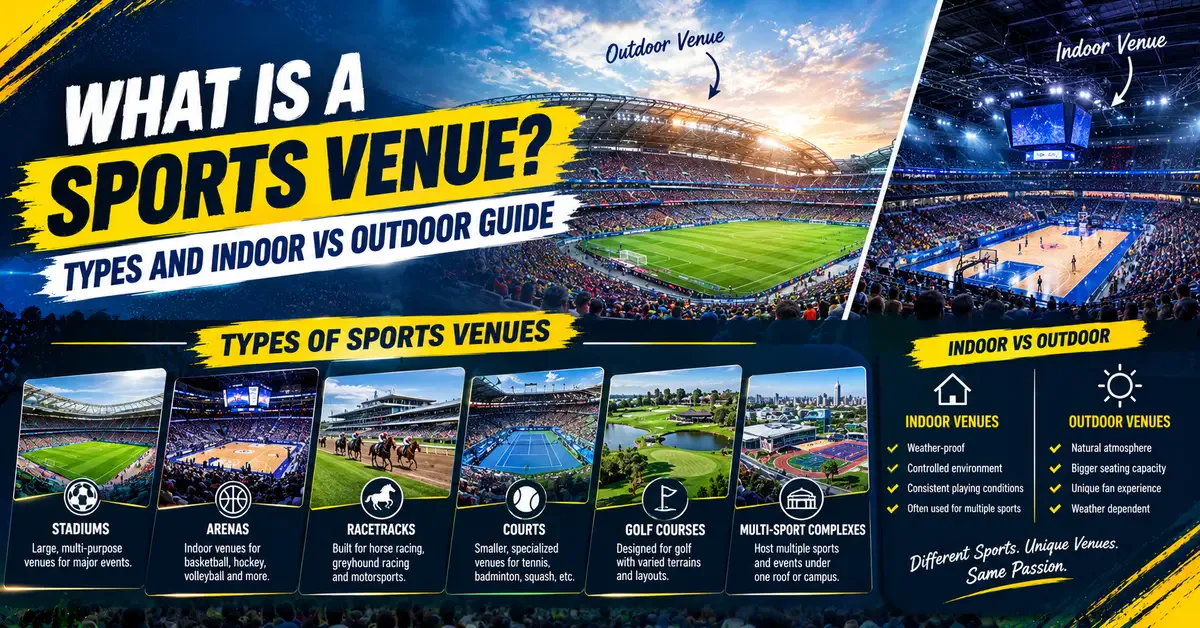
Editorial illustration — not evidence of a visit to a venue or attendance at an event.